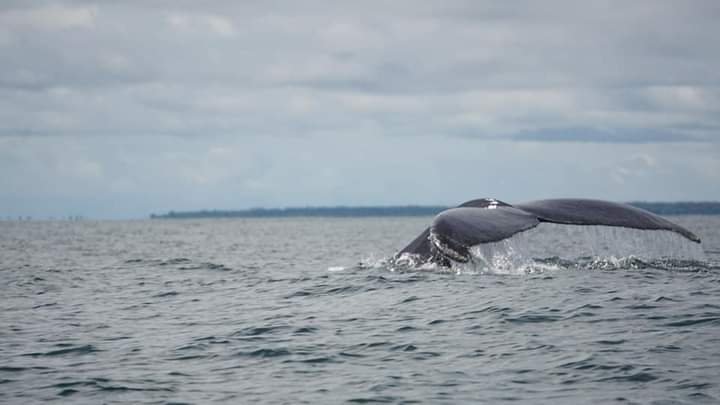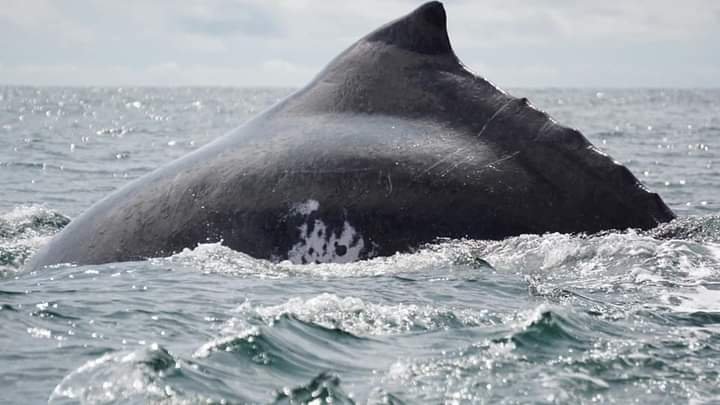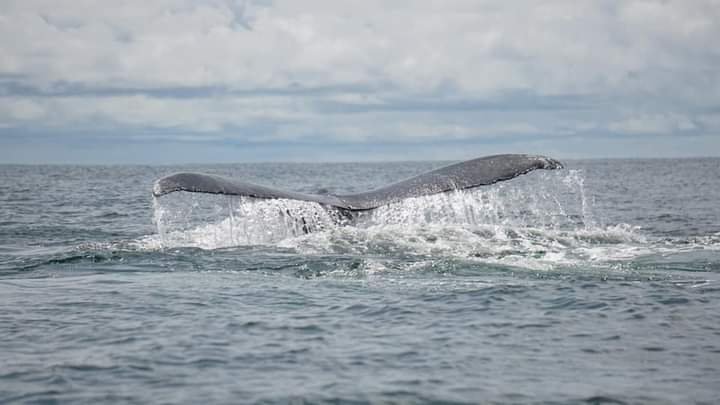

At Visita Colombia, impact is shared responsibility.
That’s why 15% of every purchase goes directly to families in Bahía Málaga, families I’ve worked with for years. Supporting their well-being in their own territory. Not only through specific projects, but by responding to everyday needs as they arise.
Protecting nature also means ensuring a dignified life for the people who protect it.
Ongoing project
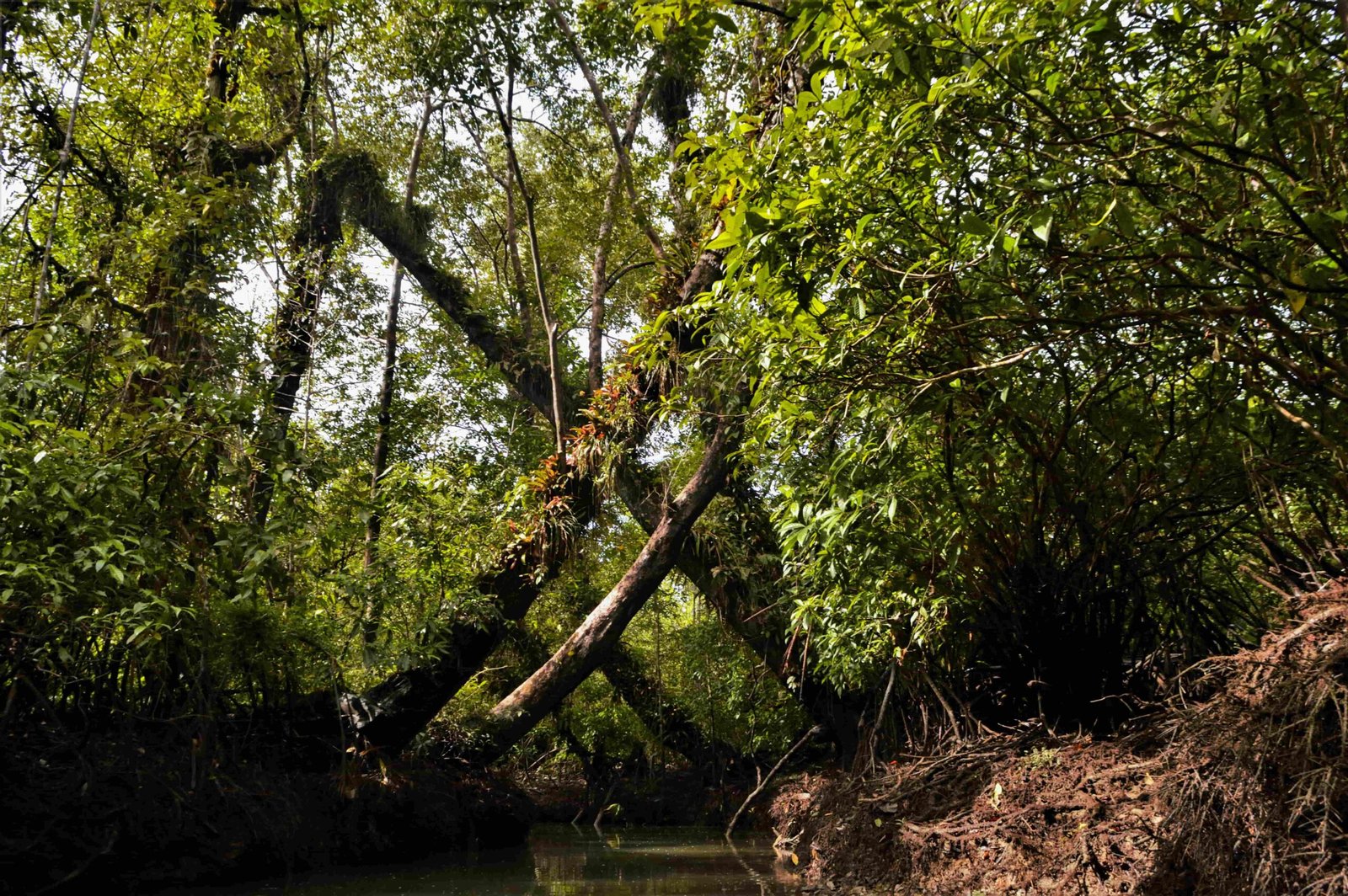
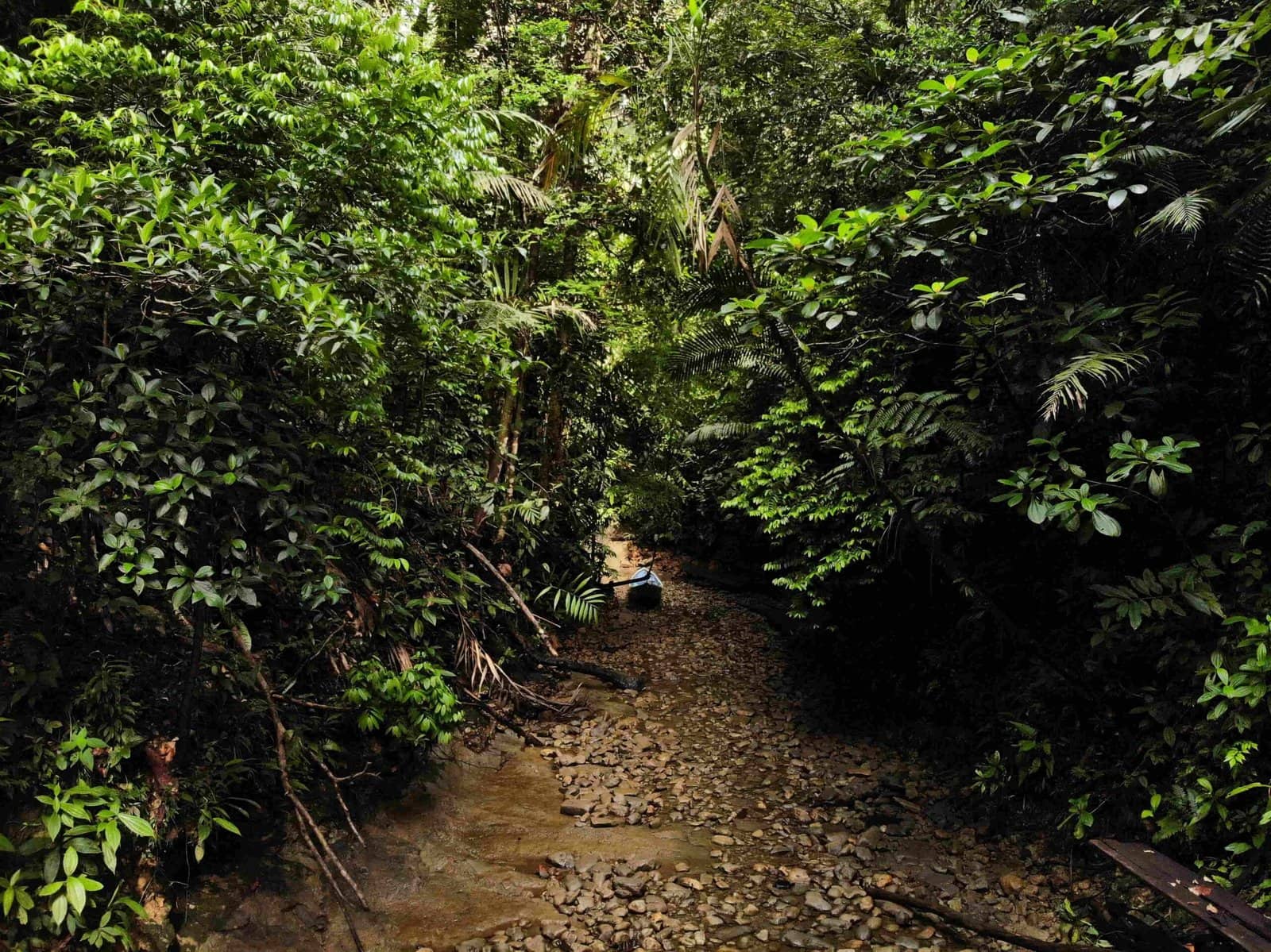
Since 2016, I have been planting mangroves in Bahía Málaga in partnership with Econatal.
Today, the mission continues. Restoring vital coastal ecosystems while creating more stable income opportunities for local families.
Many community members rely almost entirely on whale-watching season to sustain themselves throughout the year. By adopting a mangrove, you help diversify income sources and strengthen long-term ecological restoration.
The goal is to expand restoration efforts and invite more people to be part of the impact. Bbecause the more we contribute, the stronger and more lasting the change becomes.
Juanchaco, Buenaventura Enero, 2025
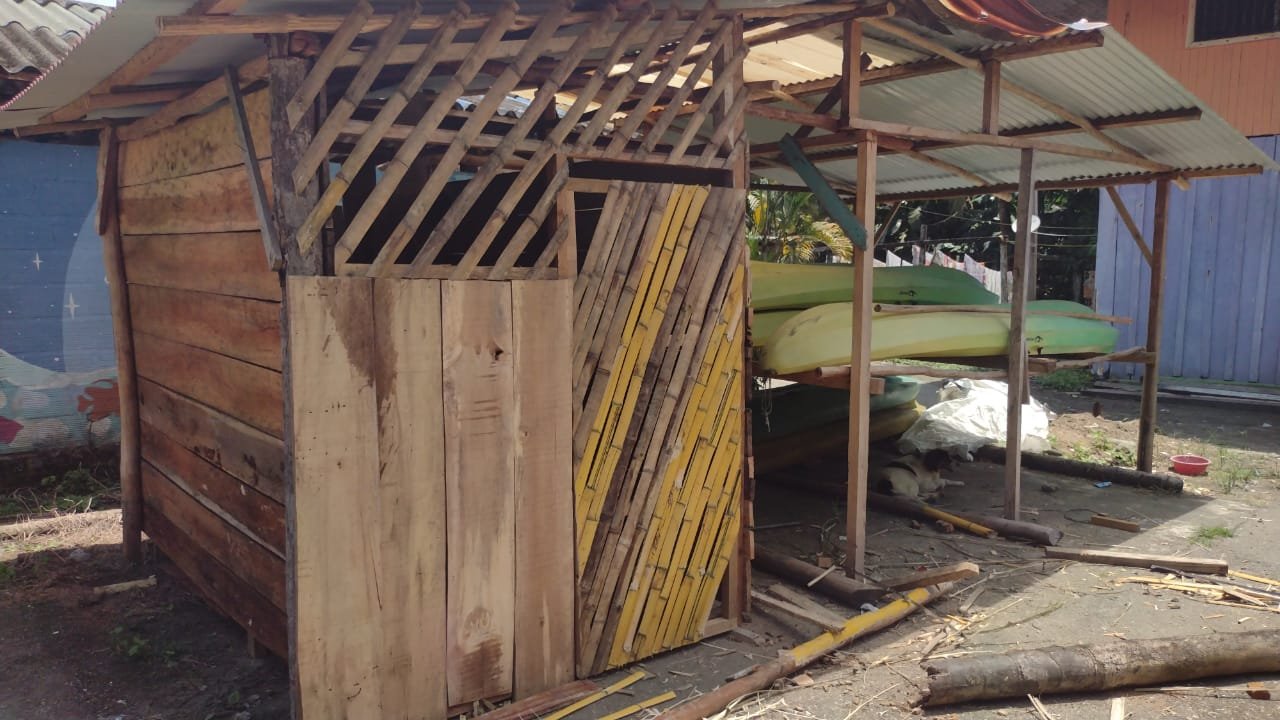
In December 2024, the area experienced one of the strongest tidal surges in recent years, causing severe coastal erosion. The ocean washed away several homes in the community, including Willi’s house and the structure used to store kayaks.
This loss directly impacted one of the community’s key sources of income during the off-season, when there are no whale-watching tours.
To ensure the reconstruction of essential infrastructure for kayak storage, securing:
In response, a crowdfunding campaign was launched to rebuild the infrastructure and ensure the continuity of this local economic activity.
A total of $487 USD was raised in just 18 hours, enabling a rapid community response.
Protection of a local income source, allowing kayak activities to continue during the off-season and reducing economic vulnerability after an extreme climate event.
Restoration of essential infrastructure damaged by coastal erosion, strengthening both economic and community resilience in the face of future climate events.
Preservation of low-impact tourism practices, ensuring proper storage of equipment while promoting a responsible relationship with the marine ecosystem.
Mobilization of solidarity and external support through crowdfunding, demonstrating the viability of community-driven rapid response mechanisms to climate emergencies.


Juanchaco, Buenaventura
October 1st, 2022
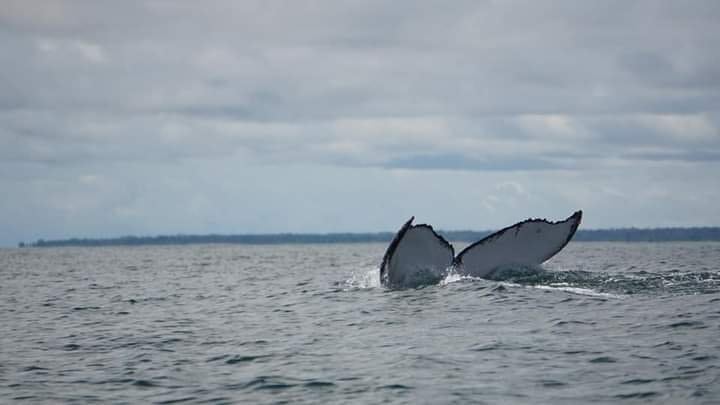
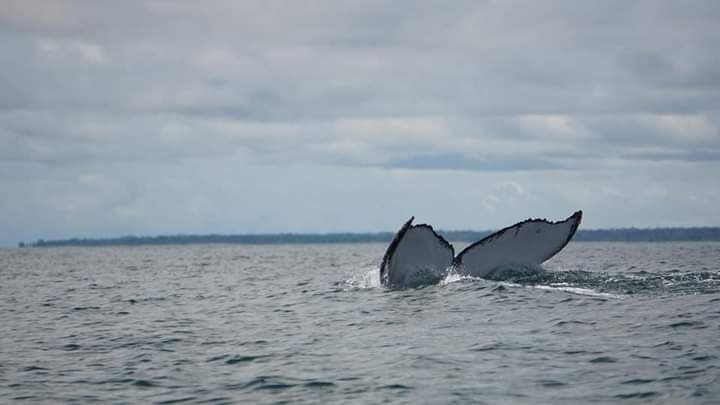
Whale watching in Juanchaco is one of the main economic activities between July and October. However, many tourism experiences can be intrusive, overlooking the fact that humpback whales arrive in these waters to give birth and teach their calves essential survival behaviors.
At the same time, community associations such as Econatal are committed to strengthening responsible whale-watching practices. Prioritizing meaningful encounters without pursuing, harassing, or altering the whales’ natural behavior.
To strengthen responsible whale watching by incorporating non-invasive listening tools that allow whales to be heard without disturbing their ecosystem.
To enhance the visitor experience by adding an educational and sensory component that fosters deeper awareness of marine life.
To support the economic sustainability of Econatal as a community-based association, enabling them to differentiate their services and increase the value of their offering.
To contribute to participatory marine science processes by facilitating the recording and documentation of whale songs for conservation and learning purposes.
A crowdfunding campaign was launched to acquire a hydrophone, audio recorder, SD memory cards, protective equipment, and a speaker. Essential tools to complement whale-watching excursions and enable the recording of whale songs.
Within two weeks, $348 USD was raised to purchase the equipment. Due to limited availability in Colombia, the devices were sourced from the United States.
The hydrophone was delivered to Econatal for use in both tourism activities and community-based learning and participatory science initiatives developed in the territory.



In Juanchaco, Buenaventura, limited access to technology created barriers to consistent virtual education for children.
Many students depended on their mothers’ mobile phones. When their mothers were working, they were unable to attend online classes regularly or participate in complementary educational activities.
At the same time, there was an opportunity to initiate a participatory science program to document species in one of the most biodiverse yet under-documented regions in the world.
With the support of Motorola Colombia’s #PowerToEmpower program, access to 40 mobile devices was facilitated for children in Juanchaco, Buenaventura.
Additionally, 2 tablets and 1 laptop were collected to support educational activities.
To ensure proper functionality and durability, each phone required:
A SIM card with a $5 USD data credit
A waterproof protective case
Tempered glass screen protection
A crowdfunding campaign was launched to cover these additional costs, raising $320 USD.

Juanchaco y Ladrilleros, Buenaventura
December 24th, 2021
View this post on Instagram
Willi wanted to give a full Christmas outfit (shirt, pants, and shoes) to five children who spend their free time learning with him about conservation and caring for their territory.
I proposed including rain jackets as well, recognizing that supporting their participation in conservation activities requires adapting to one of the rainiest regions in the world.
Supporting these processes from childhood strengthens their connection to nature and their territory. It also contributes to creating positive pathways for growth in a region facing significant social vulnerability.
To provide waterproof rain jackets for children involved in conservation activities, enabling their continued participation in a highly rainy environment.
To support environmental education processes from an early age, strengthening their bond with the natural world.
To offer a meaningful Christmas gift as a gesture of care and community support.
To contribute to positive development alternatives in a context of high social vulnerability.
A fundraising campaign was launched through Instagram stories, with the initial goal of purchasing clothing for five children.
The response was overwhelmingly positive. After reaching the original goal, fundraising continued, ultimately raising $590 USD, which allowed for the purchase of:
66 full outfits
7 additional pairs of shoes
8 additional rain jackets
In total, 71 children from the region benefited — far exceeding the original goal of five.
An additional $40 USD was raised to cover shipping costs from Bogotá to Juanchaco.
Clothing was distributed door-to-door in Juanchaco and Ladrilleros.
Archipiélago de La Plata, Buenaventura
January 25th, 2020
In May 2019, the school in the Archipiélago de La Plata collapsed. I learned about the situation in July while visiting the community during a tour.
During that visit, several mothers shared that students were attending classes only a few days per week, rotating between different homes.
They also expressed the desire to create a community library that would ensure access to education and include books free of gender stereotypes — so that girls would not feel limited when imagining their future.
To create a community-led educational alternative in the absence of formal school infrastructure.
To integrate a gender equity approach into available educational materials for children.
To support a locally led initiative responding to territorial isolation and limited educational access.
A community library was established through partnerships with Colegio Colombo Gales and Colegio Corazonista in Bogotá, which collectively donated 545 books.
Construction of the library space in La Plata was carried out by a local woodworker, supporting his transition toward legal economic activities and contributing to forest protection efforts.
To transport the books, requiring two boat transfers from Buenaventura, $255 USD was raised. Five travelers also supported the delivery and organization of the books within the community.
Funds were also used to cover construction costs for the library within the community center.
The timing proved critical, as the pandemic left the community without internet access and with limited diesel-powered electricity available only from 6:00 to 9:00 p.m., making physical access to books essential.

Juanchaco, Buenaventura
October 6th, 2018
In July 2018, we attended one of the rehearsals at Doña Marina’s home alongside Dan Neville, a vibraphonist and marimba player from San Francisco who had studied the instrument for seven years and dreamed of playing it in Colombia’s Pacific region.
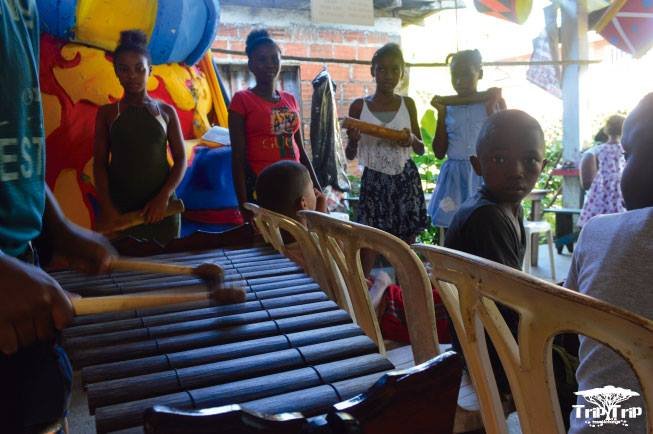
During that visit, we noticed that several instruments were damaged. Yet almost every afternoon after school, around 68 children gathered at her home to play music and dance.
The project centered on supporting Doña Marina’s community work as a cultural bearer of the traditional marimba music and dances of Colombia’s South Pacific, recognized as Intangible Cultural Heritage of Humanity, and on strengthening the safe space she creates by opening her home for these artistic processes.
A crowdfunding campaign was launched to support the musical and cultural training processes of children in Juanchaco, Buenaventura. The goal was to help them continue preparing for their presentation at the Festival Folclórico Marimba y Playa, an annual event marking the close of whale-watching season.
Contributors from 10 different nationalities participated, raising $1,123 USD, which funded:
The production of a complete set of traditional instruments, cununos, guasas, bombo, and marimba, handcrafted by marimba player and artisan Alí Cuama from Buenaventura, strengthening his craft and ensuring high-quality, durable instruments.
The purchase of a clarinet.
Transportation of the instruments to Doña Marina’s home.
Ladrilleros, Buenaventura
July, 2016
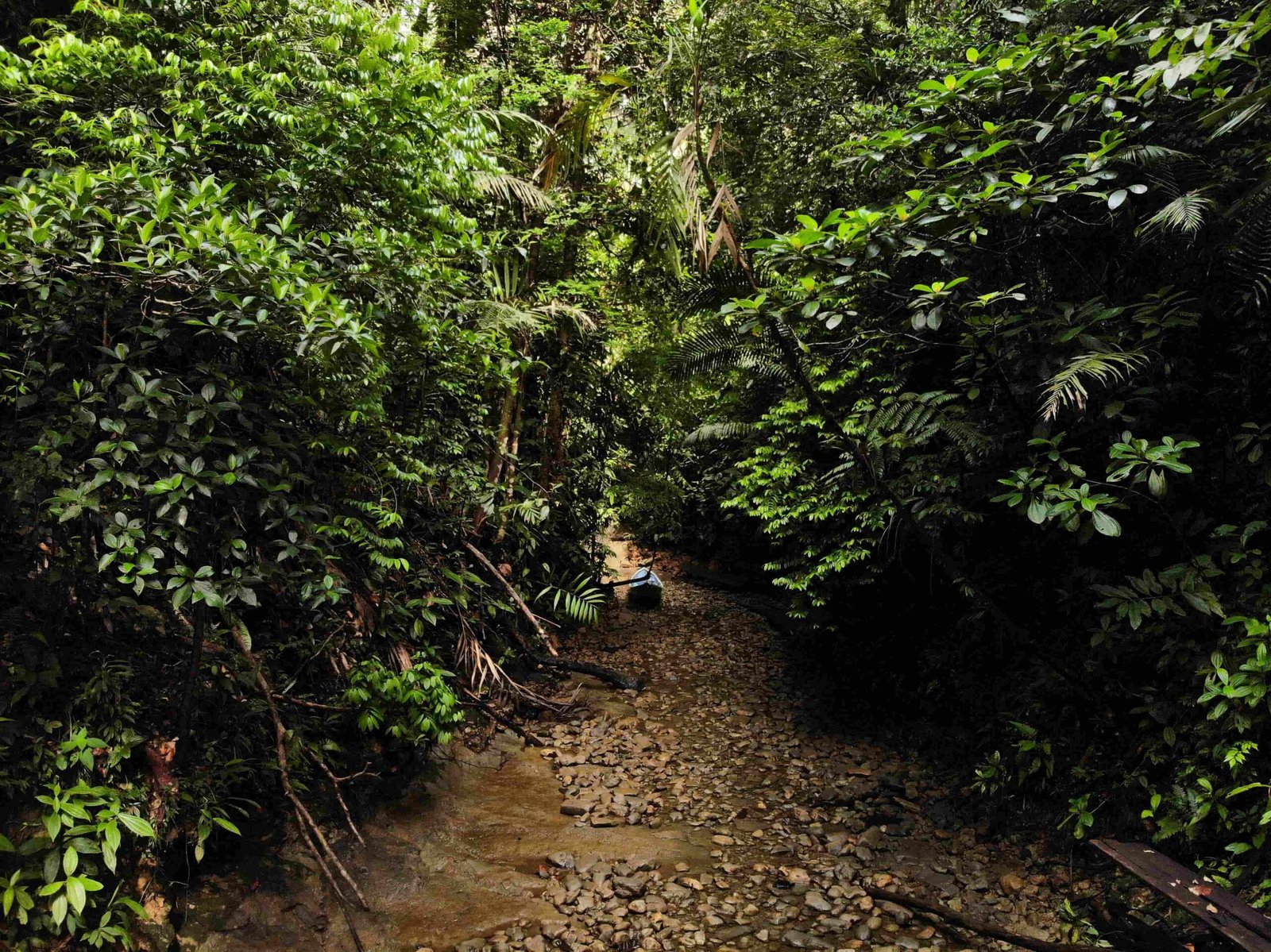
The beaches and mangroves of Colombia’s Pacific coast receive large amounts of plastic waste carried by ocean currents from different parts of the world.
This pollution is often wrongly attributed to local communities, who face structural limitations in waste management due to their geographic isolation and the high cost of transportation. As a result, many communities resort to burning waste as a last alternative.
To raise awareness about plastic consumption and its environmental impact, particularly among travelers, encouraging habit changes that begin at home and contribute to long-term reductions in marine pollution.
A responsible travel experience was designed where mornings were dedicated to plastic waste collection and afternoons to exploring Bahía Málaga.
Each day, four hours were allocated to clean-up efforts. One day on the beach and one day in the mangroves.
During these activities, visitors who were not originally part of the program voluntarily joined the clean-ups. In total, 20 large tarps of plastic waste were collected.
These efforts helped demonstrate that a significant portion of marine debris originates in large urban centers and directly impacts coastal communities and fragile ecosystems.
This became the first project implemented and marked a turning point for TripTrip, establishing early best practices in the territory. From this experience, internal policies were developed to reduce plastic consumption during trips and improve responsible waste handling.
Whenever plastic was consumed during a trip, it was transported back to Cali to be properly processed and delivered to recycling workers.
Travelers also received a reusable bottle (if they did not already have one) to encourage long-term habit change beyond the trip itself.
Local cooks were encouraged to eliminate single-use plastics and serve food in reusable dishware instead. A shift that was positively received by the community, reducing waste and lowering recurring expenses.
This initiative marked the beginning of a deeper environmental commitment, both for TripTrip as a travel agency and personally. Reinforcing the understanding that education is one of the most effective tools for addressing environmental challenges in remote destinations.
Protecting biodiversity while strengthening local stewardship
Diversifying community income through sustainable tourism.
Expanding learning opportunities in isolated territories.
Safeguarding heritage and creating protective spaces for youth.
Tourism can be a powerful tool for change, when it is designed responsibly and implemented with intention.
If you’re seeking guidance to develop a sustainable, community-centered project with measurable impact, I’d be glad to collaborate.